
Many quarry and mining investors struggle to choose between a jaw crusher and an impact crusher for their crushing production lines. Although both are mainstream crushing equipment, they differ greatly in application scenarios, working principles and operational performance. This article clearly analyzes the core differences between jaw crusher and impact crusher to help users select suitable machines efficiently.
一. Application & Production Line Position Differences
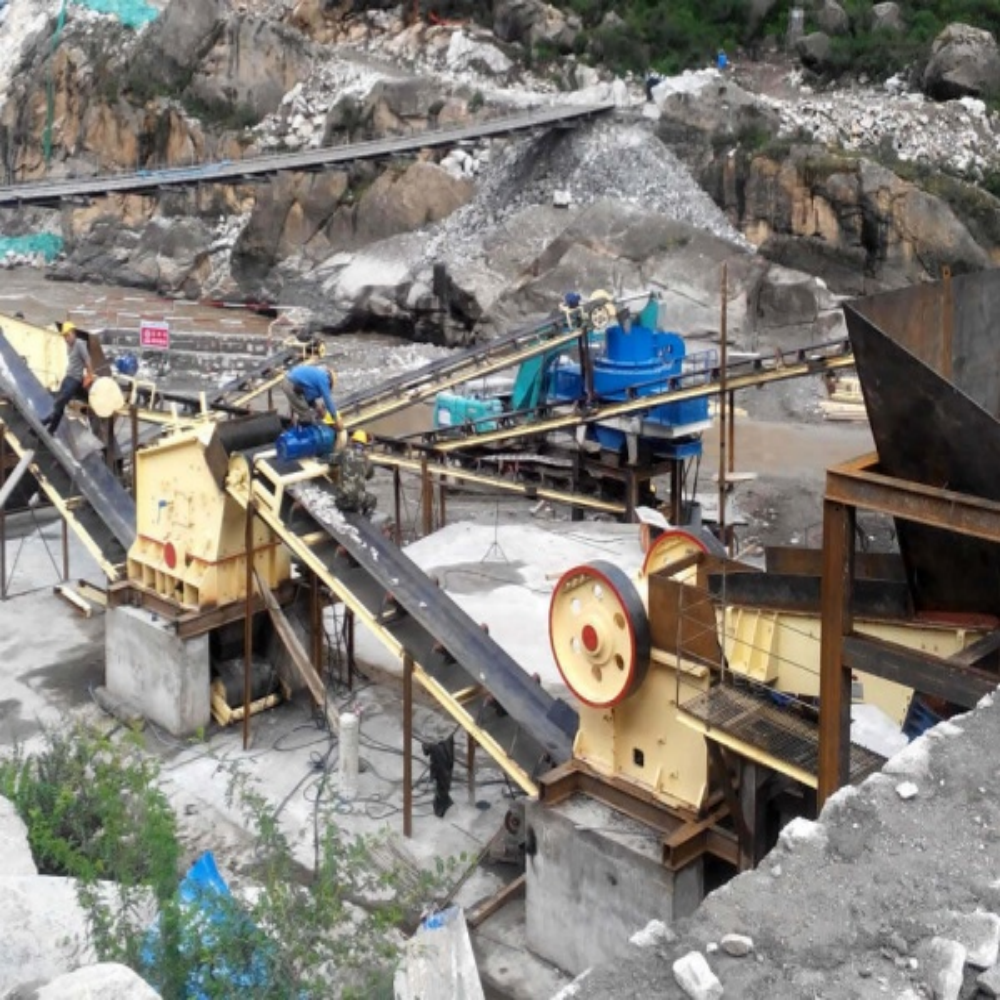
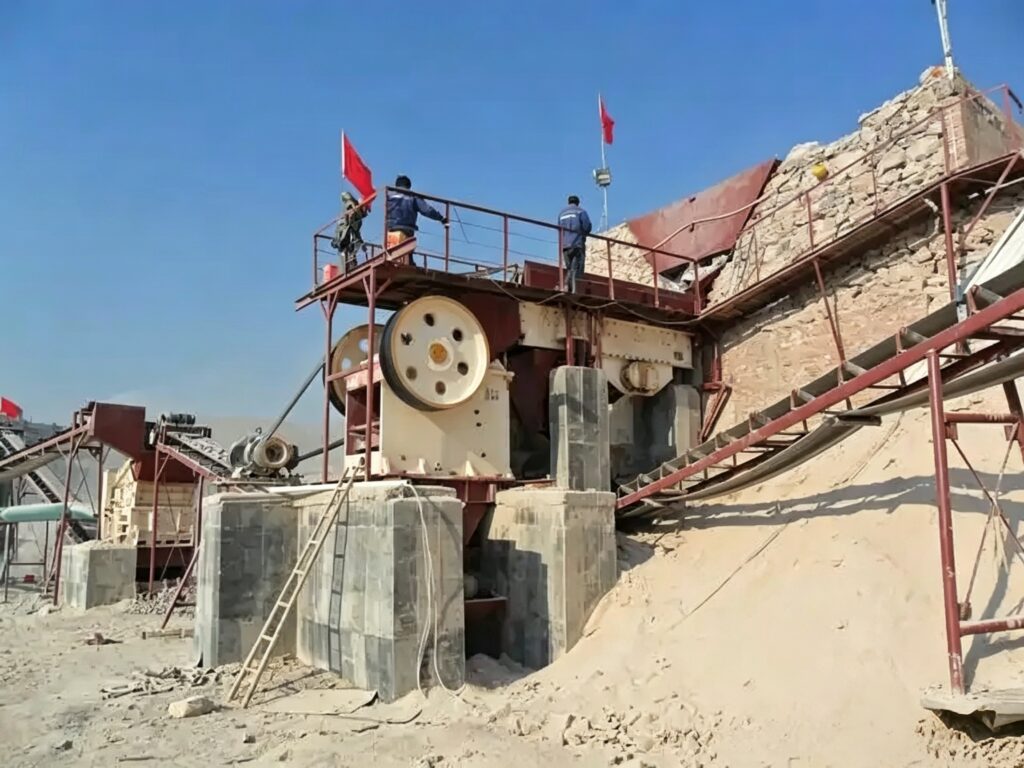
A jaw crusher mainly serves as the primary coarse crushing equipment in crushing plants. It handles large raw ore materials and crushes oversized stones into medium-sized particles that meet the feeding requirements of secondary crushing equipment. It adapts to high-hardness ores such as granite and basalt, making it the standard first-stage crushing machine for mine production.
An impact crusher is usually deployed for secondary medium and fine crushing. It fits medium and low hardness brittle materials including limestone, marble and concrete construction waste. It is not suitable for high-hardness abrasive ores, as such materials will cause severe wear on vulnerable parts and greatly increase operating costs.
二. Working Scope & Crushing Parameter Differences
The jaw crusher features a wide working range. It can process materials with a compressive strength below 320MPa, with a feeding particle size ranging from 125mm to 750mm. It supports both coarse and fine crushing, delivers stable output, and fully meets the primary crushing demands of various mining and aggregate projects.
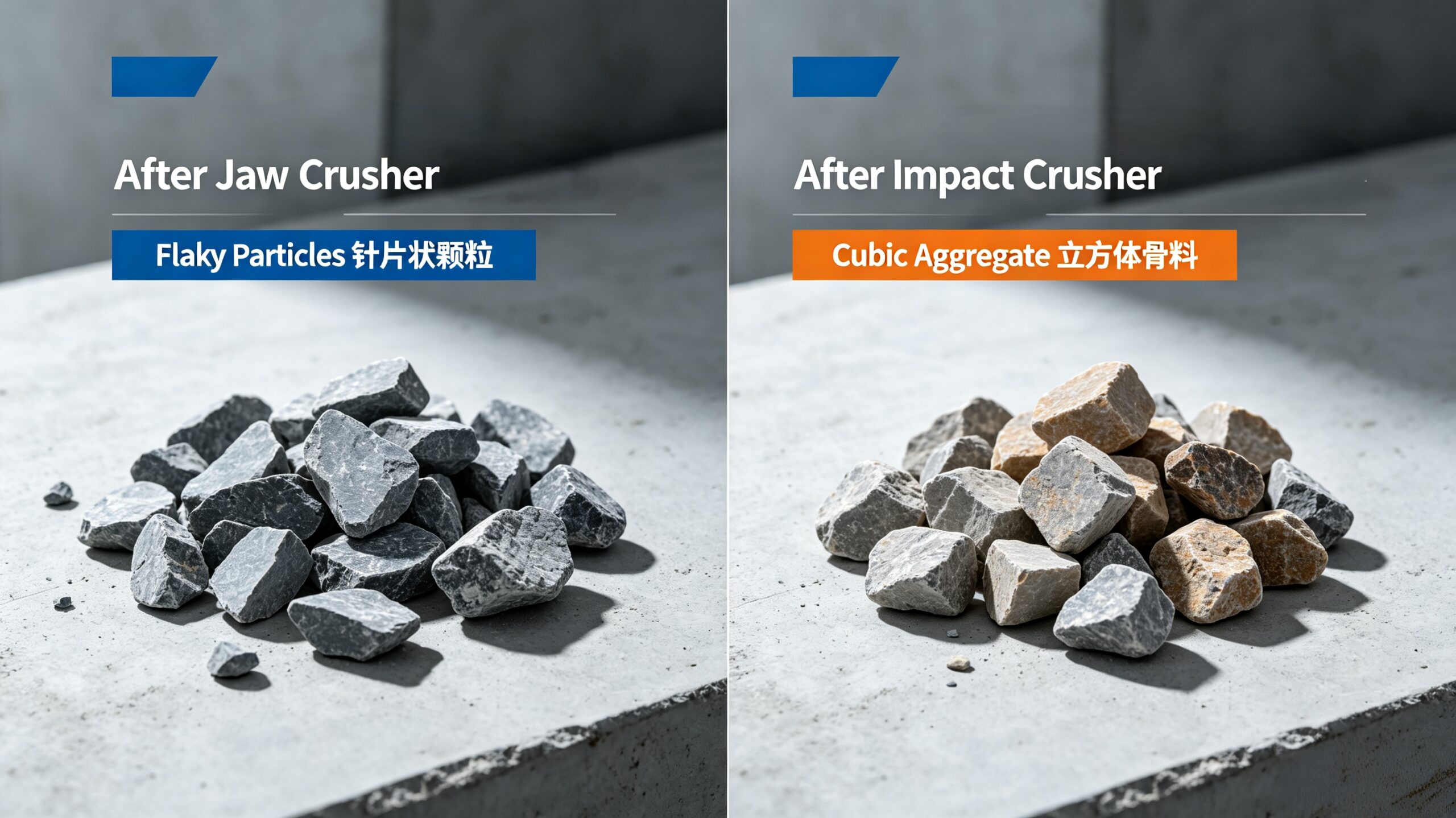
The impact crusher has a maximum feeding size of 500mm and adapts to materials with compressive strength below 50MPa. Its biggest advantage is excellent product particle shape. The finished materials are cubic without cracks and internal tension. Users can flexibly adjust the discharge granularity to diversify finished product specifications.
三. Working Principle Differences
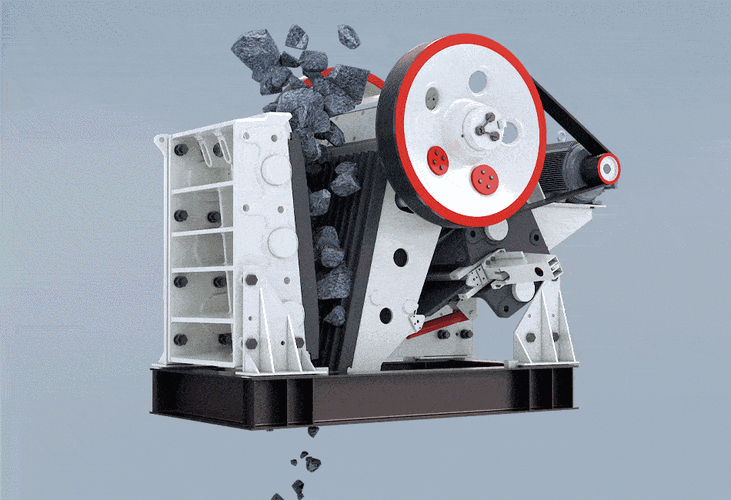
The jaw crusher adopts squeeze and splitting crushing principles. The motor drives the eccentric shaft to make the movable jaw move periodically up and down. When the movable jaw approaches the fixed jaw, it squeezes and splits materials to realize crushing. When the movable jaw retreats, qualified materials are discharged from the bottom of the crushing chamber in batches.
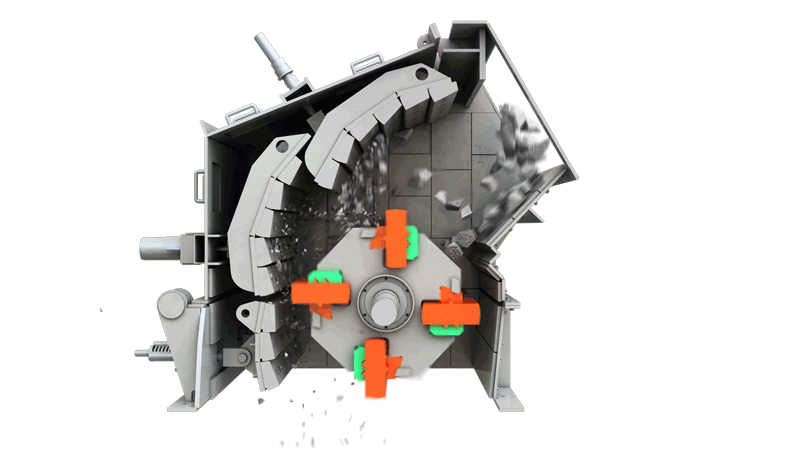
The impact crusher relies on high-speed impact crushing. The rotor rotates at high speed with the motor. The blow bars strike incoming materials violently, throw them to the impact plates for secondary crushing, and repeatedly collide and crush materials in multiple impact chambers. Materials finally discharge when reaching the standard granularity.
四. Equipment Performance & Operational Advantages
The jaw crusher has a deep and dead-space-free crushing chamber, which improves feeding capacity and production efficiency. It adopts a gasket-type discharge opening adjustment device with a wide adjustment range. With a simple and reliable structure, it reduces daily maintenance difficulty. The equipment achieves 15%-30% single-machine energy saving and features low noise and low dust emission.
The impact crusher has a large feeding port and high crushing cavity, with fewer stone powders in finished products. Users can easily adjust the gap between impact plates and blow bars to control discharge particle size accurately. It features a compact rigid structure, large rotor inertia, convenient maintenance and high comprehensive production benefits.
五. Professional Selection Suggestions
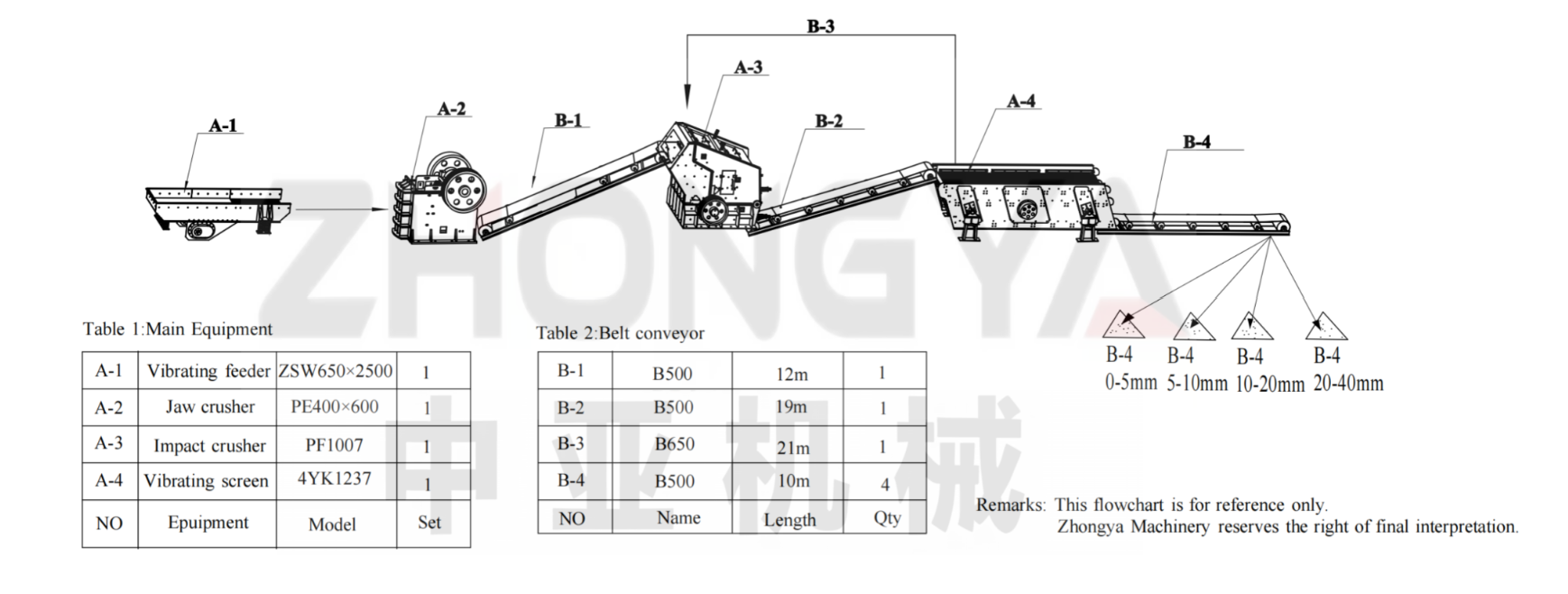
For large-sized and high-hardness ores, select a jaw crusher for primary crushing to reduce wear and lower operating costs. For medium and low hardness materials that require high-standard cubic aggregates, match a jaw crusher with an impact crusher to complete coarse crushing and fine shaping respectively, which is the most efficient crushing process.
In short, the jaw crusher focuses on coarse crushing and high adaptability to hard materials, while the impact crusher excels in fine crushing and high-quality particle shaping. Reasonable matching of the two crusher equipment can maximize the production capacity and finished product quality of the aggregate production line.
 whatsApp