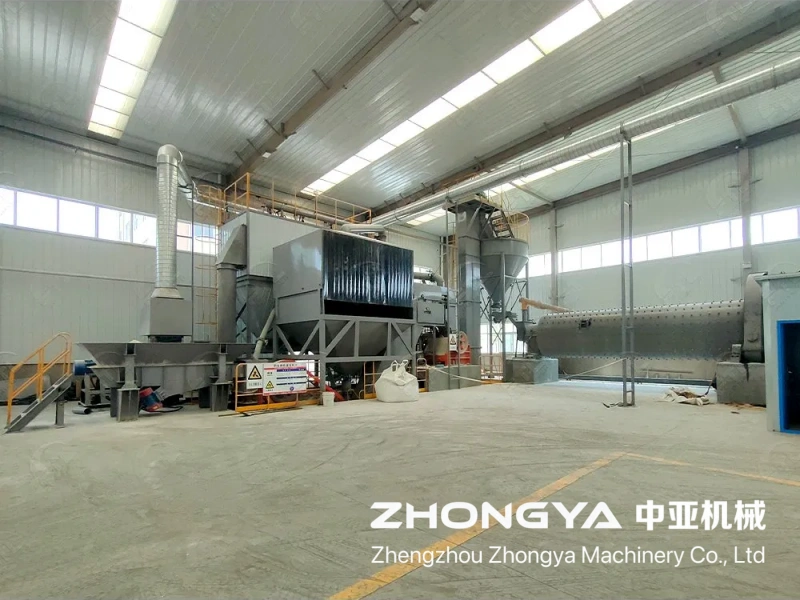
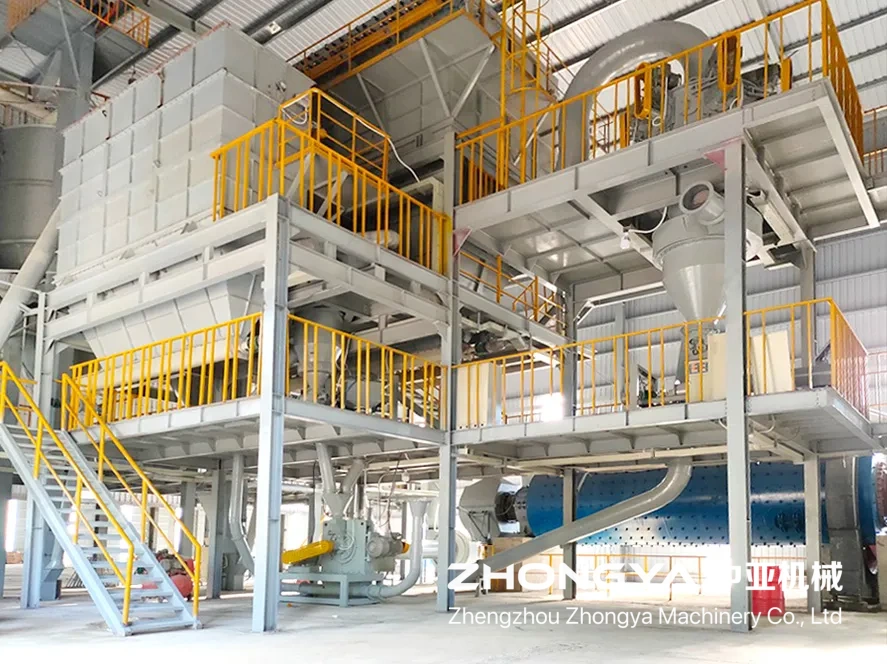
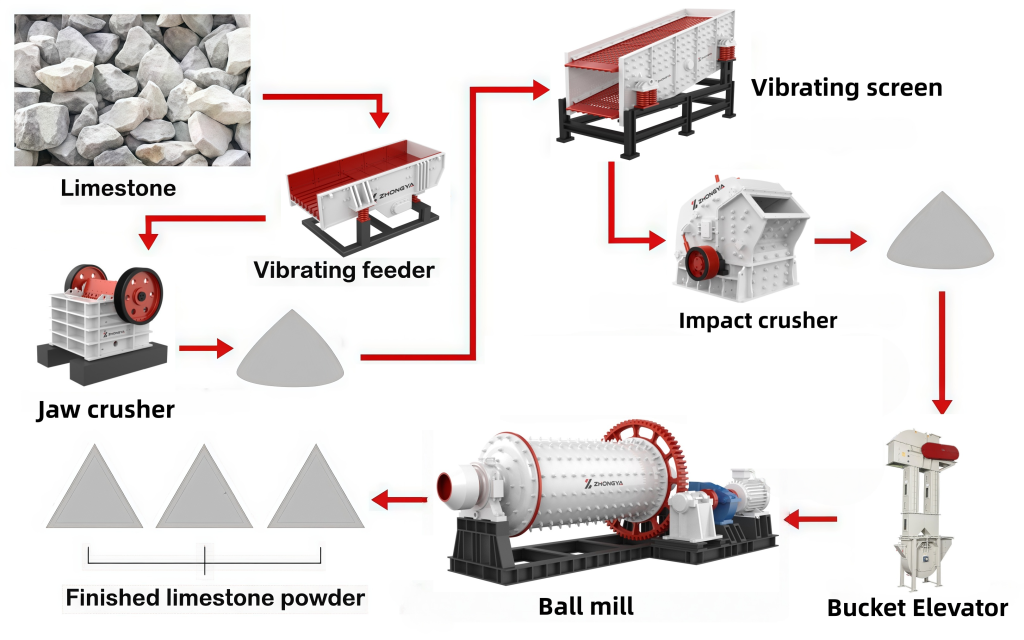
Limestone mill plant typically includes crushing, grinding, grading, and collection to ensure uniform fineness and stable output of the finished product.
limestone powder grinding mill plant is a facility where limestone is ground into a fine powder for various industrial applications. Limestone is a sedimentary rock composed principally of calcium carbonate (calcite) or the double carbonate of calcium and magnesium (dolomite). Powdered limestone is used in the textile, paint, paper, rubber, glass and plastic industries amongst others. They are mostly used as fillers. Apart from this, it is used in the steel industry for the production process where limestone is used to remove impurities.
Process Description
1.Crushing: Crushing is the process of breaking materials into particle sizes suitable for feeding into a mill. Commonly used crushers include jaw crushers, impact crushers, and hammer crushers.
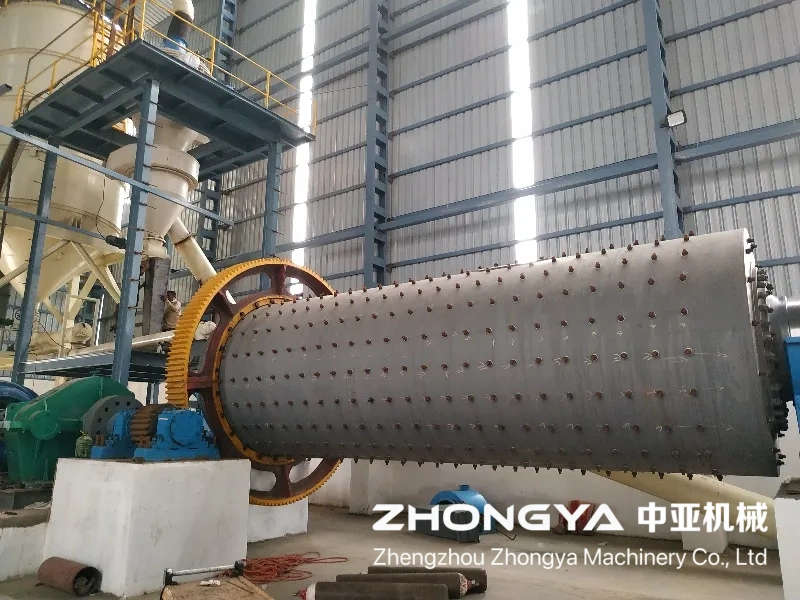
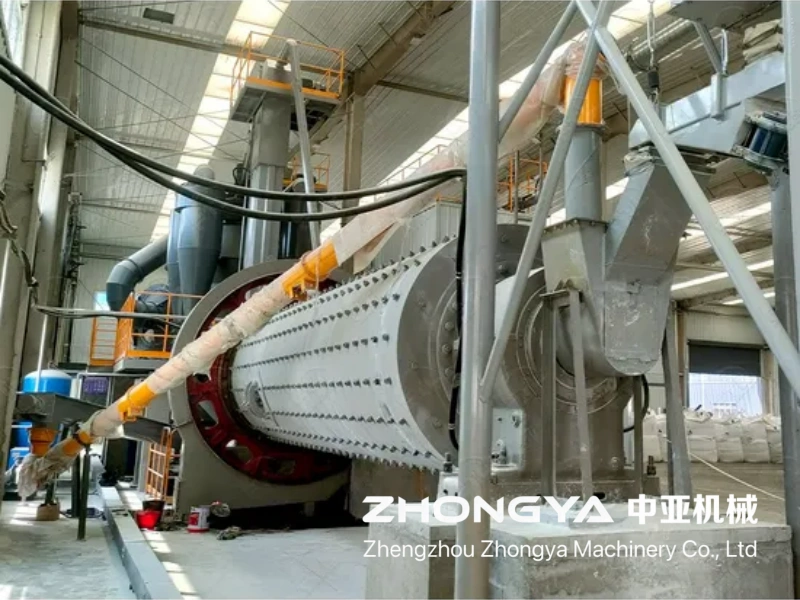
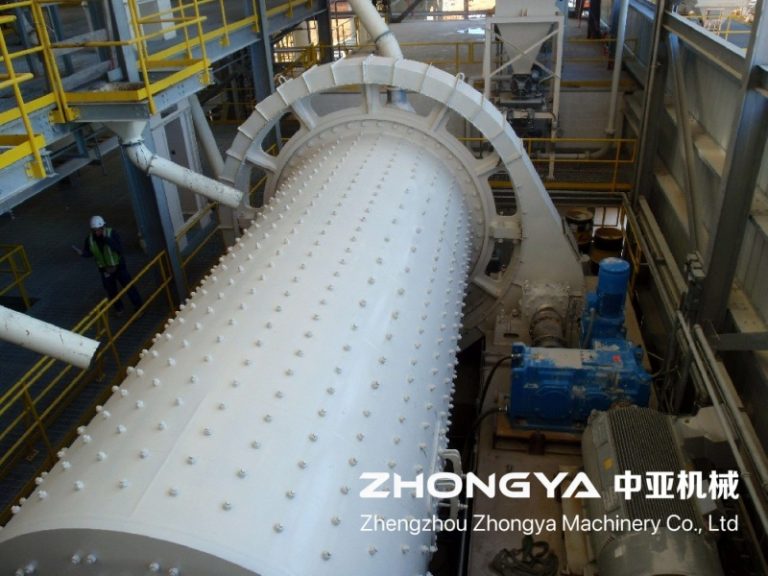
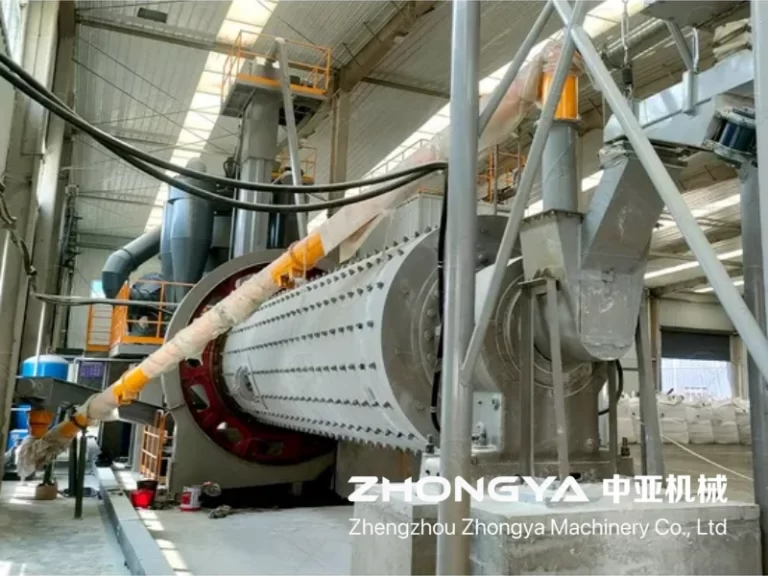
2.Grinding: The crushed limestone particles are fed into a silo via a bucket elevator, and then uniformly and quantitatively fed into the grinding chamber of a ball mill by a vibrating feeder. This is the main process in producing limestone powder, and grinding can be carried out according to different fineness requirements. Commonly used grinding mills include ball mills and Raymond mills.
3.Powder selection: The pulverized limestone powder is graded and screened by a classifier to ensure that each particle of powder meets the specified standards. The unqualified powder will be separated by the separator and returned to the main machine for re-grinding. It is to sort out qualified limestone powder, collect the coarse particle to return to grind again.
4. Packaging: Qualified limestone powder is generally stored in storage silos or packaged before it can be sold as commodities.
Process Advantages
Reasonable layout, small area Compact structure design, vertical structure, small area. It has own production system.
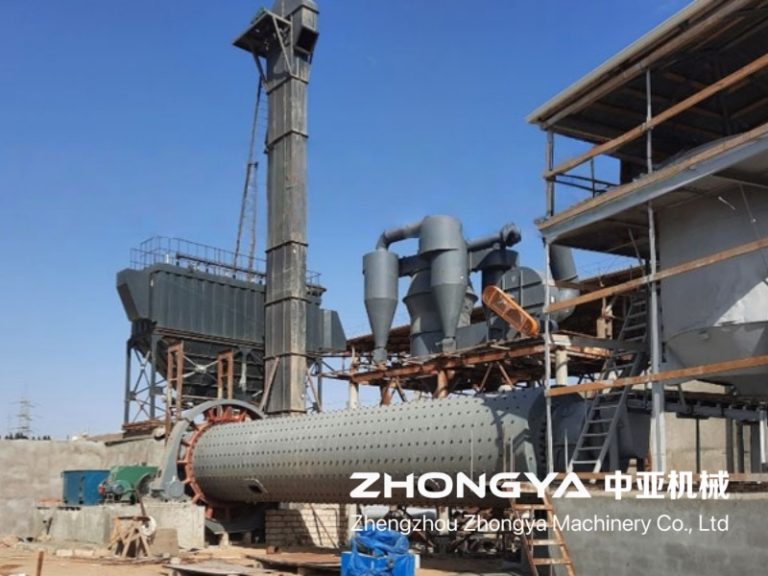
Energy saving, stability and high efficiency It adopts isolated cyclone powder collector, which can effectively improve the efficiency and precision of powder selection.
Simple operation and maintenance Made of high-quality steel, the machine is durable and reliable.
Green environmental protection, no dust spillover Using negative pressure system, no dust pollution.

 whatsApp