Kaolin processing improves the purity, quality and whiteness of kaolin by removing impurities. Through crushing, grinding and separation, raw kaolin ore becomes a high-value material widely used in paper, ceramics and coatings, bringing significant economic benefits.
Kaolin is a white clay, primarily composed of aluminum silicate. Due to its pure white and fine appearance, it is also known as white clay or porcelain clay. Kaolin is mainly composed of kaolinite clay minerals, accounting for over 90%, and also contains minerals such as montmorillonite, feldspar, halloysite, and quartz.
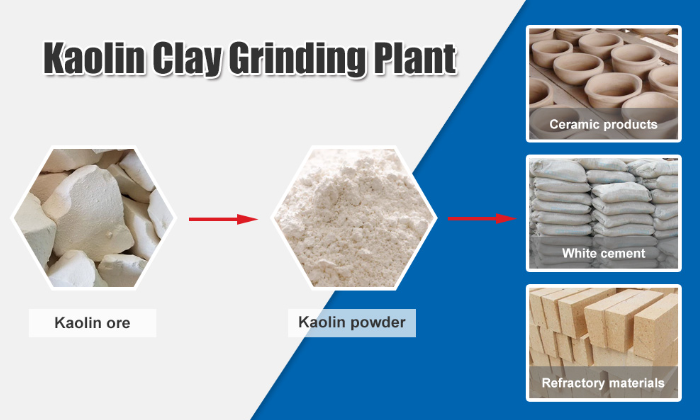
Kaolin powder is commonly used in the production of ceramic products and white cement. It can also be used as a filler in the production of paper, refractory materials, cosmetics, and other products.
Process Description
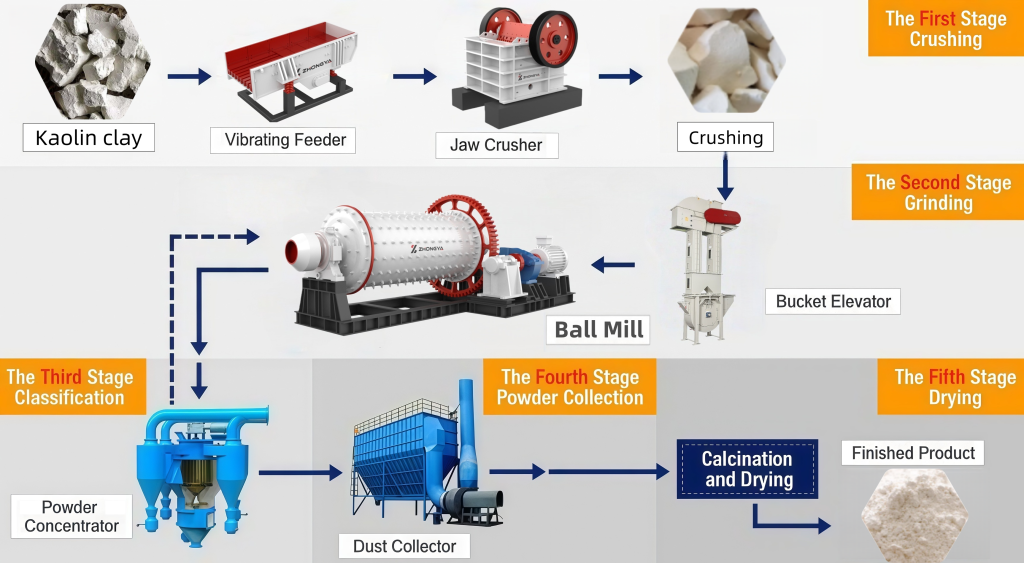
1.Crushing: Kaolin is fed into a jaw crusher and crushed to a feed size suitable for the mill.
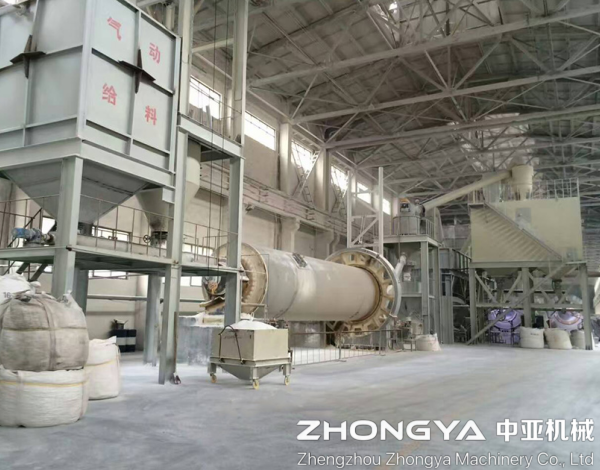
2.Feeding System: The feeding system is designed to convey kaolin to the mill at a constant rate. This system may include conveyors, hoppers and feeders. The feed rate into the mill is controlled by adjusting the feeder, which is crucial for maintaining normal grinding operations.
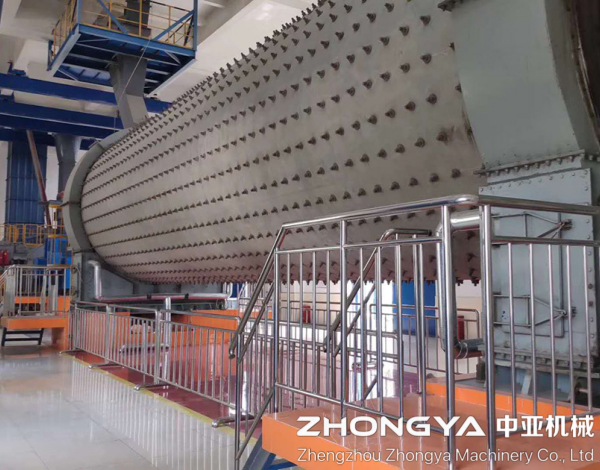
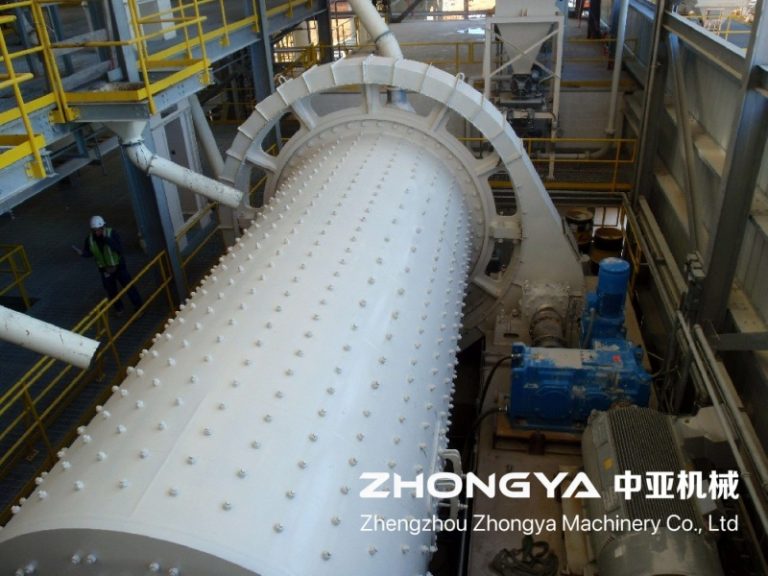
3.Grinding System: The crushed kaolin is conveyed by an elevator into a storage hopper, then fed by a feeder into the mill for grinding.
4.Classification System:The ground material is classified by a classifier; substandard powder is returned to the main mill for regrinding.
5.Collection System: Powder meeting the required fineness is carried by air through pipes into the powder collection system for collection. The finished powder is transported to the finished product warehouse.
Process Advantages
Uniform crushing and stable feeding Jaw crushing ensures precise particle size control and continuous, efficient mill operation.
Intensive grinding and uniform fineness Closed-loop circulation grinding ensures thorough material processing and consistent finished product particle size.
Intelligent grading and efficient recycling Unqualified powder is automatically recycled, reducing waste and improving overall yield.
Sealed Collection, Environmentally Friendly and Dust-Free Full-process negative pressure conveying and sealed dust collection ensure clean, environmentally friendly production with low losses.

 whatsApp