Cement mill plant is an important part of the cement production process. It is a facility used to grind raw materials into a fine powder, known as cement clinker, which is the key ingredient for making cement.
Applied material: Rock, gravel, different kinds of ore, fireclay, slag and other hard materials.
Cement is a powdery hydraulic inorganic cementing material. After adding water and stirring, it becomes a slurry that could harden in the air or in water and bond sand, stone and other materials firmly together. Cement is widely used in civil engineering, water conservancy, national defense and other projects as an important cementing material. Clinker with appropriate gypsum, mixed material are grind into cement, this is known as cement grinding plant.
Process Description
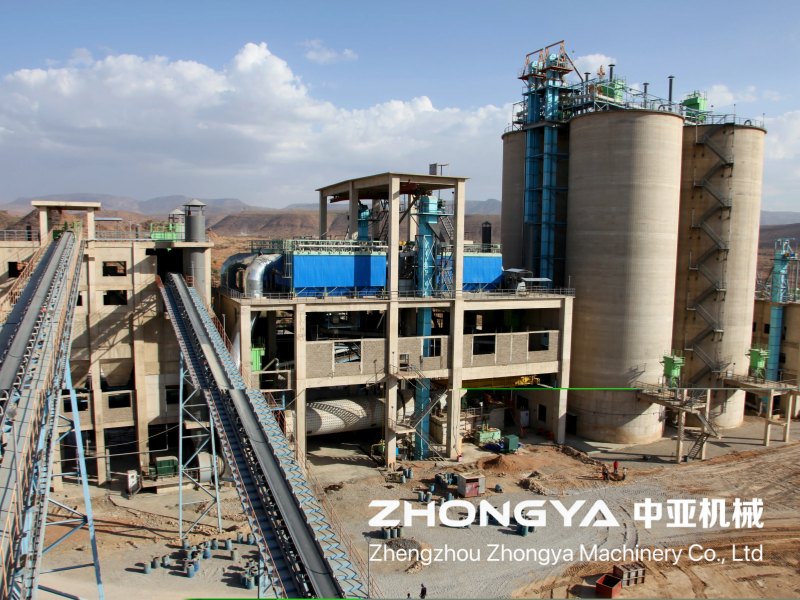
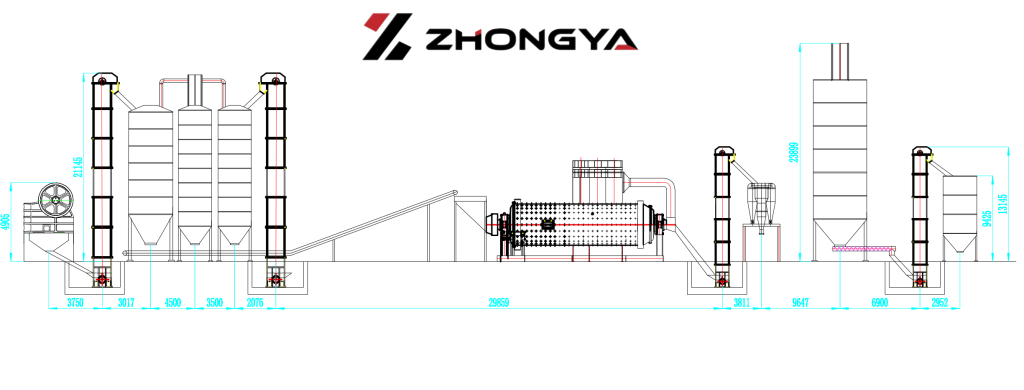
1.Raw material preparation and measurement: Clinker, gypsum, fly ash/slag, and other mixed materials are temporarily stored in batching silos, and then accurately measured and proportioned according to the formula using a quantitative belt scale, and transported by belt conveyor and bucket elevator.
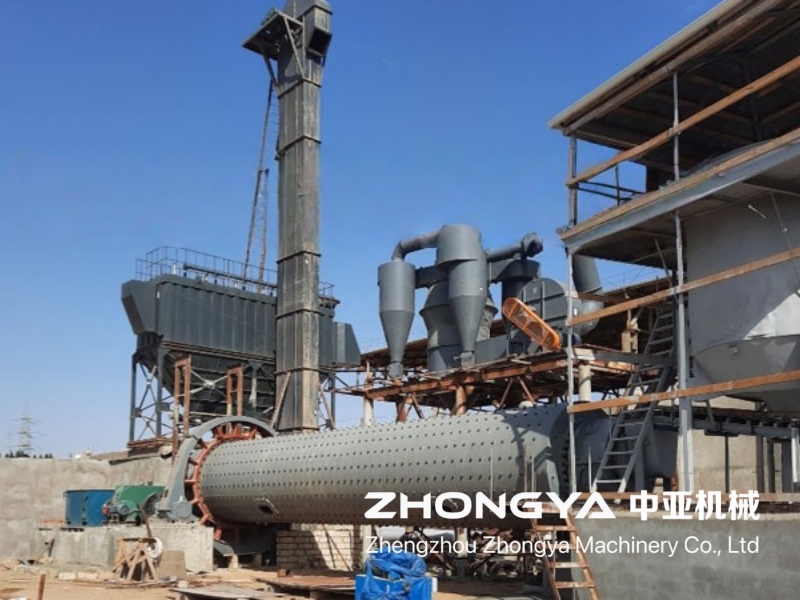
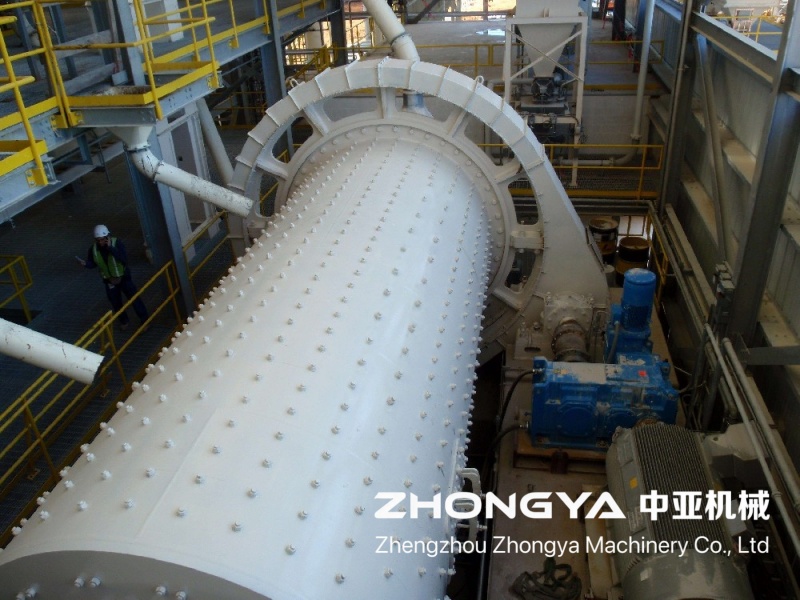
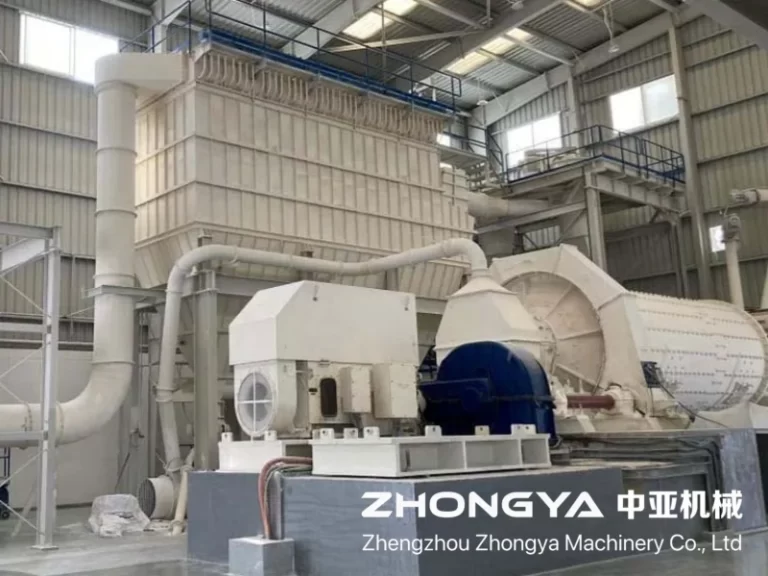
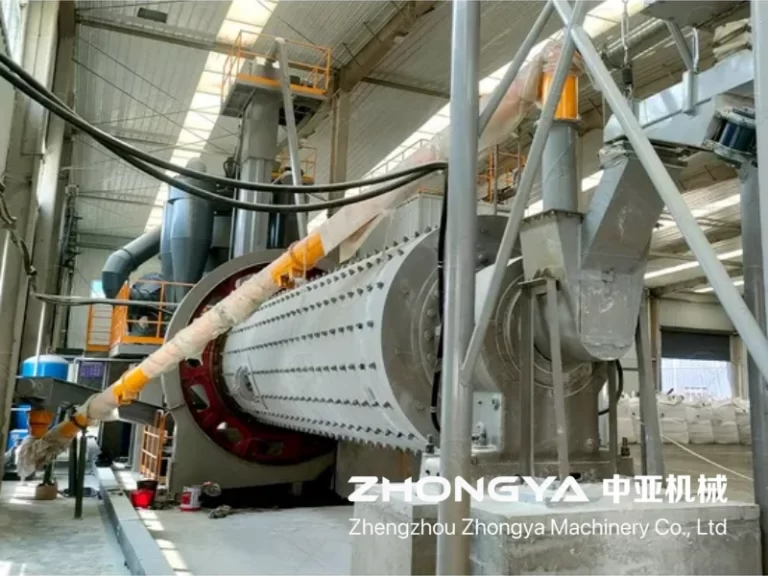
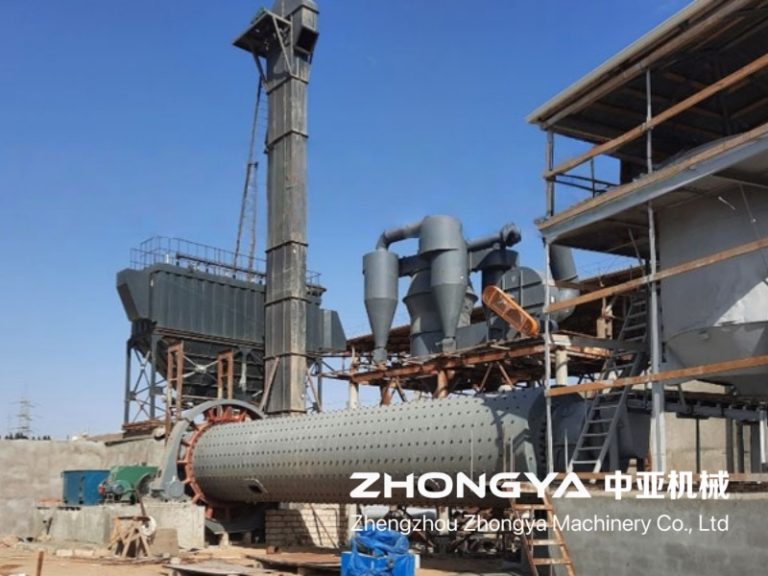
2.Grinding Pre-treatment / Primary Grinding: The fine powder is fed to a ball mill for further grinding. In a closed-circuit system, coarse particles are separated from the fine powder and returned to the ball mill for further grinding, thus avoiding over-grinding.
3.Classification and Sizing: Material exiting the ball mill enters a high-efficiency classifier, where airflow separates particles meeting fineness requirements.
4.Dust Collection and storage: The dust collector features high dust removal efficiency and excellent sealing performance, effectively improving the working environment and preventing air pollution. Cement packaging can ultimately be handled using a cement packaging machine or a finished product silo.
Process Advantages
Energy efficiency and cost reduction Reduce material waste and maintenance costs.
Quality enhancement and stable output The product has uniform fineness and stable quality, suitable for continuous large-scale production.
Environmental compliance Low noise, minimal dust emissions, and waste heat utilisation improve workplace safety and comfort.
Flexible Adaptability Low noise and minimal dust emissions improve workplace safety and comfort.

 whatsApp